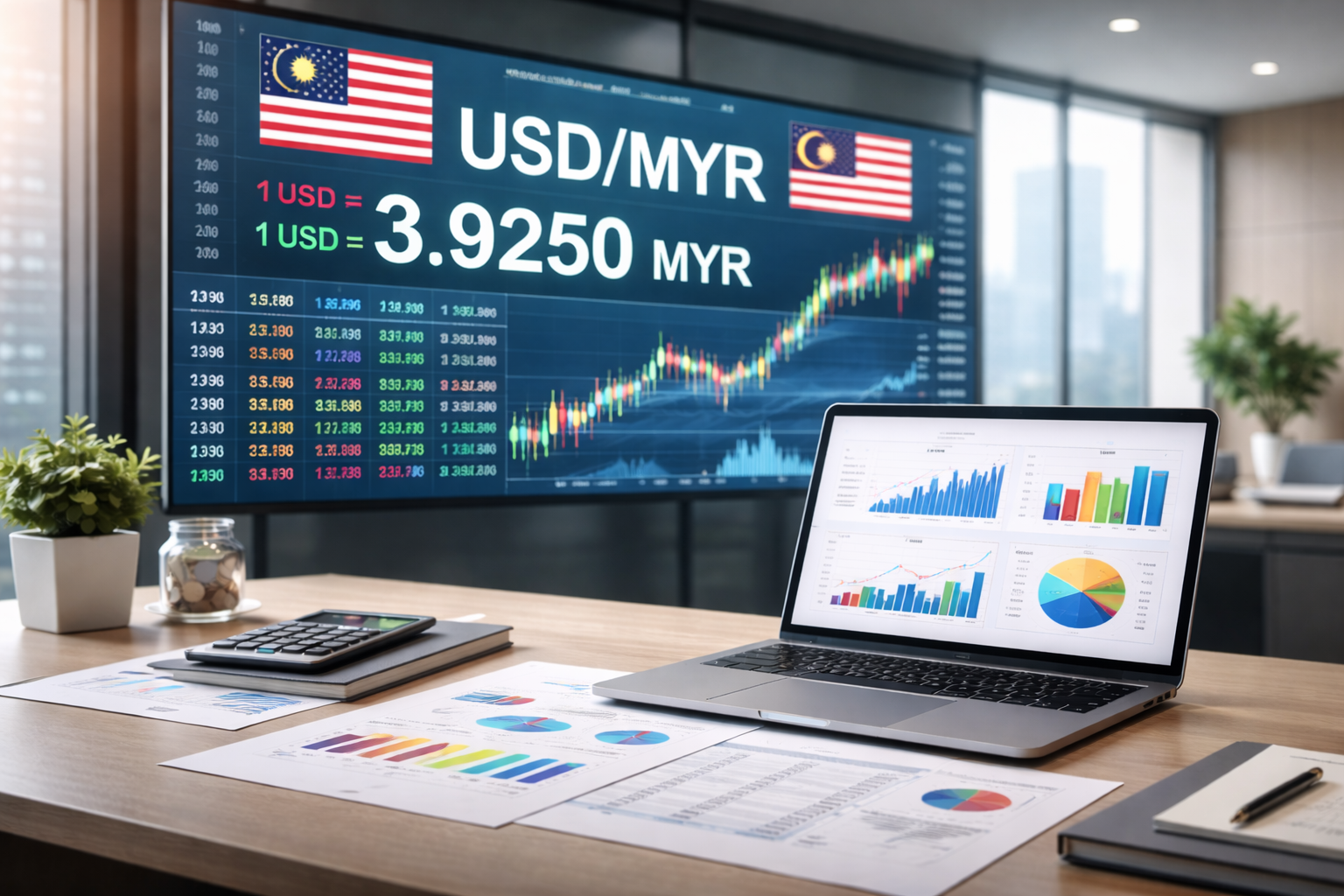
Malaysia’s currency has shown notable strength recently, marking one of its strongest performances against the US dollar in years. This trend reflects rising investor confidence in Malaysia’s economy and carries meaningful implications for businesses — especially those involved in international trade, imports, and financing decisions.
Here’s what’s happening with the ringgit and why it matters for Malaysian businesses.
Ringgit’s Recent Moves Against the US Dollar
The Malaysian ringgit has been rising against the US dollar, with recent trading showing gains that reflect improved market sentiment. On Wednesday, the ringgit opened higher against the US dollar, strengthening to around RM3.92–3.94 per US $1 amid mixed signals from US Federal Reserve officials on future interest rate moves. This indicates ongoing upward momentum for the currency.
Earlier in the year, the ringgit reached its strongest level in nearly five years, briefly breaking below the RM4.00 mark against the US dollar as market confidence improved.
Research covering recent months also projects that Malaysia’s currency could continue performing strongly throughout 2026, driven by positive economic fundamentals and sustained confidence from investors.
Why the Ringgit Is Strengthening Now
The currency’s rally is influenced by multiple factors:
1. Stronger Economic Confidence
Investors are upbeat about Malaysia’s economic outlook, which supports demand for ringgit assets and contributes to the currency’s appreciation. A recent report highlighted that improved sentiment has helped the ringgit outperform many regional peers.
2. Weaker US Dollar
Part of the currency’s gains comes from relative weakness in the US dollar. With mixed views from the US Federal Reserve on future interest rate cuts, global markets are repositioning, which can benefit emerging‐market currencies like the ringgit.
3. Solid Fundamentals
Malaysia’s economic performance — including growth in manufacturing, services, and investment activity — supports a stronger ringgit. Analysts believe that the currency’s current strength reflects real economic fundamentals, not just short‑term fluctuations.
What This Means for Malaysian Businesses
Lower Import Costs
A stronger ringgit reduces the cost of importing raw materials, equipment, and components priced in US dollars. This can be especially beneficial for businesses that rely on international suppliers, helping reduce cost pressures.
Improved Profit Margins
When import costs fall due to a stronger currency, businesses can maintain or even improve profit margins without needing to raise prices domestically.
Foreign Loan Repayment Becomes Easier
For companies that have financing or debt denominated in foreign currency (especially US dollars), a stronger ringgit can make repayments more manageable in local currency terms.
Exporters Need to Watch Carefully
While a stronger ringgit can benefit importers, it can make Malaysian exports more expensive for overseas buyers. Export‑oriented businesses should monitor exchange rate movements and consider pricing strategies and hedging options to remain competitive.
What It Means for Financing & Loans
Exchange rate movements affect not only trade costs but also business financing decisions:
- Loan Timing: Stronger currency conditions may make it a good time to negotiate financing terms, especially for loans tied to foreign market conditions or global interest rates.
- Cash Flow Planning: Businesses can factor currency trends into cash flow forecasts and debt servicing plans.
- Investment Decisions: Confidence in the local currency can support decisions to expand operations or take on structured financing.
Conclusion
The Malaysian ringgit’s recent strength against the US dollar reflects both market confidence and solid economic fundamentals. For Malaysian businesses, this trend can offer advantages — especially for importers and firms with foreign currency obligations — while exporters may need to adapt their strategies.
Understanding currency trends is important not just for short‑term decisions, but for long‑term financial planning, loan strategy, and risk management.
If you’re considering financing options and want to understand how market changes like this affect your business, start with an eligibility assessment and financial review.