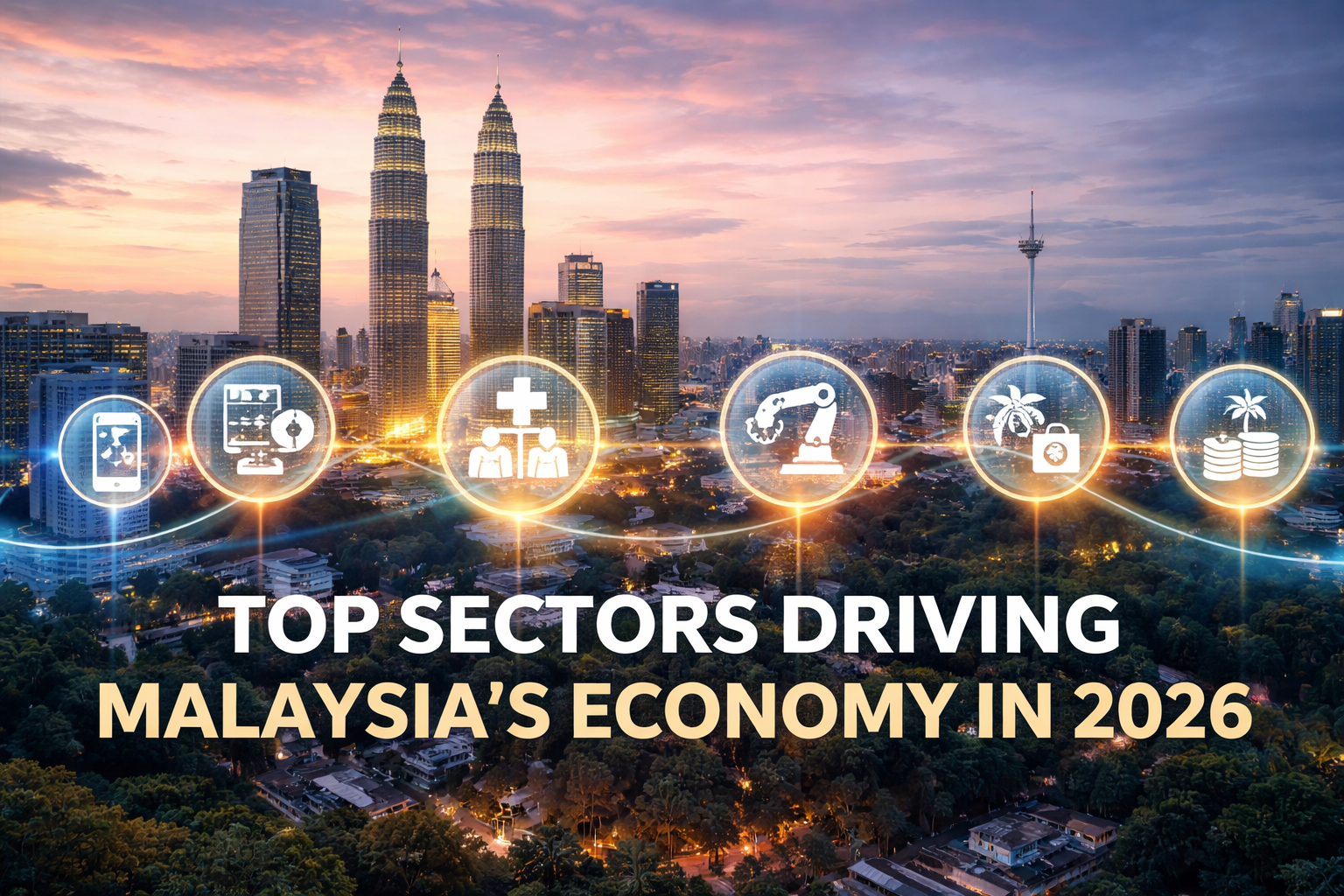
As Malaysia moves further into 2026, several key sectors are playing a major role in driving economic growth. Understanding these industries is essential for businesses, investors, and individuals who want to stay ahead in a dynamic market. Here’s a closer look at the top sectors shaping Malaysia’s economy this year.
1. Digital Economy & Technology
The digital economy continues to be one of the fastest-growing sectors in Malaysia. E-commerce, fintech, cloud computing, and software services are expanding rapidly, driven by increased internet penetration, mobile usage, and government support for digital innovation.
Small and medium-sized enterprises (SMEs) are increasingly adopting digital tools to improve efficiency, reduce costs, and reach new customers. Startups focusing on fintech, logistics technology, and digital payments are also attracting both local and international investments.
2. Renewable Energy & Sustainability
With global and national emphasis on sustainability, Malaysia is investing heavily in renewable energy, such as solar, hydro, and biomass. Policies encouraging green energy adoption and carbon reduction are creating opportunities for businesses in energy production, technology, and environmental consulting.
The shift toward sustainable industries also influences manufacturing, construction, and real estate sectors, as companies integrate eco-friendly practices into their operations.
3. Healthcare & Biotechnology
The healthcare sector remains a priority, with rising demand for medical services, pharmaceuticals, and biotechnology solutions. The COVID-19 pandemic highlighted the importance of resilient healthcare systems, and ongoing investments continue in hospital infrastructure, medical research, and telemedicine services.
Biotech innovations, including diagnostics and vaccine development, are increasingly attracting both funding and talent, making Malaysia a growing hub for life sciences in the region.
4. Manufacturing & Export-Oriented Industries
Manufacturing continues to be a backbone of Malaysia’s economy, particularly in electronics, semiconductors, and machinery. Export-oriented industries benefit from stable trade relations and global demand for high-tech products.
Companies in these sectors are investing in automation, smart factories, and advanced supply chain management, helping Malaysia remain competitive in the global market.
5. Tourism & Hospitality
After the easing of pandemic restrictions, Malaysia’s tourism and hospitality sector is rebounding strongly. International arrivals and domestic tourism are driving growth in hotels, travel agencies, airlines, and entertainment services.
Tourism-related businesses are increasingly focusing on digital marketing, sustainable travel options, and experience-based services to attract diverse customer segments.
6. Financial Services & SME Support
Financial services, including banking, insurance, and investment firms, continue to support economic growth. Bank Negara Malaysia’s initiatives, such as new SME funding programs, help businesses access capital for expansion and innovation.
The rise of fintech platforms also enables more efficient financial transactions, loan applications, and investment opportunities, supporting both SMEs and individual consumers.
Conclusion
Malaysia’s economy in 2026 is shaped by diverse and rapidly evolving sectors. Digital technology, renewable energy, healthcare, manufacturing, tourism, and financial services are key drivers of growth, investment, and job creation.
For businesses and individuals, staying informed about these sectors is crucial to identify opportunities, make strategic decisions, and contribute to Malaysia’s ongoing economic progress.