Global events can have a powerful impact on national economies, and Malaysia is no exception. With rising geopolitical tensions in regions such as the Middle East, economists and financial institutions are closely monitoring how these developments could affect global trade, inflation, and economic stability.
While Malaysia’s economy remains relatively resilient, global conflicts can still influence key economic factors that affect businesses, consumers, and borrowers.
Global Conflicts and Economic Uncertainty
Conflicts between major nations or within strategic regions can disrupt international markets and supply chains. When instability occurs, it often leads to uncertainty in global trade, higher commodity prices, and increased volatility in financial markets.
For countries like Malaysia that are highly connected to international trade, these global disruptions may affect exports, investment flows, and overall economic sentiment.
Although Malaysia continues to maintain steady economic growth, policymakers remain cautious about potential external risks that could influence future economic performance.
Impact on Oil Prices and Inflation
One of the most immediate effects of global conflict is often seen in energy markets. The Middle East, for example, plays a crucial role in global oil supply. Any disruption in the region can lead to rising oil prices.
Higher oil prices can increase transportation and production costs across many industries. When businesses face higher costs, these expenses may eventually be passed on to consumers through higher prices for goods and services.
This process contributes to inflation, which can reduce purchasing power and affect household spending.
Effects on Interest Rates and Borrowing
Global economic instability can also influence central bank policies. If inflation rises due to global supply disruptions, central banks may need to adjust monetary policies to maintain price stability.
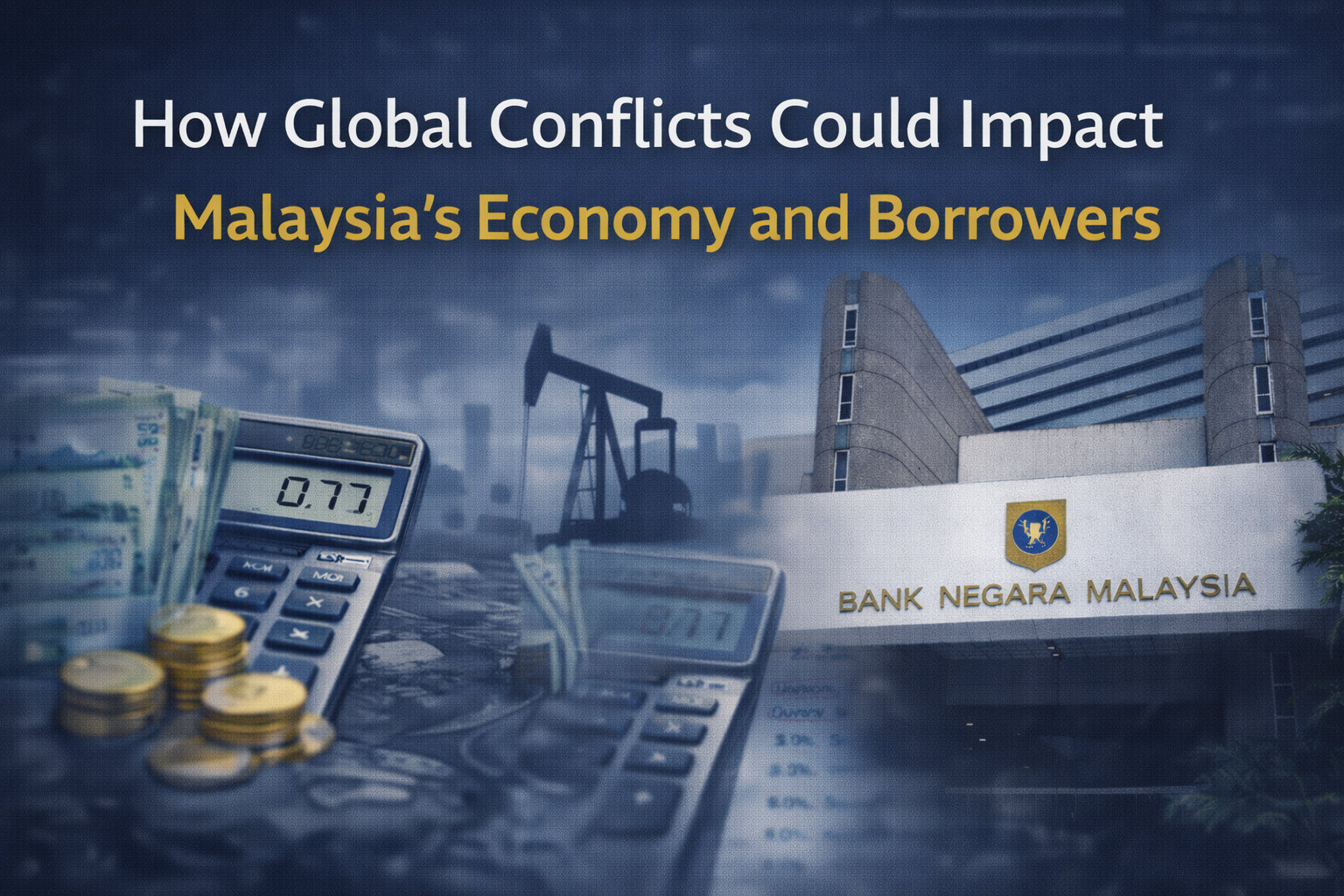
In Malaysia, Bank Negara Malaysia monitors global developments closely when making decisions about the Overnight Policy Rate (OPR). Any future adjustments to interest rates could affect loan repayments, borrowing costs, and financing conditions.
For borrowers with variable-rate loans, changes in interest rates can directly impact monthly commitments.
What This Means for Businesses
Businesses that rely on international supply chains or exports may experience increased costs or market uncertainty during periods of global conflict. Companies may need to adjust their strategies, manage costs more carefully, and ensure they have sufficient financial flexibility.
At the same time, stable domestic demand and supportive financial policies can help cushion the impact of external shocks.
Preparing Financially in Uncertain Times
Although global conflicts are beyond the control of individuals and businesses, financial preparedness can help reduce the impact of economic uncertainty. Careful financial planning, responsible borrowing, and understanding financing options can help individuals and companies navigate changing economic conditions.
For borrowers, it is important to assess affordability and choose financing options that match long-term financial capabilities.
Conclusion
While Malaysia’s economy continues to show resilience, global conflicts remain an important factor that could influence inflation, interest rates, and economic stability. Monitoring global developments helps policymakers and businesses prepare for potential economic changes.
For individuals and businesses seeking financing, understanding how global events influence economic conditions can lead to more informed financial decisions.
If you are exploring financing options or planning to manage your financial commitments more effectively, Leap Concept can assist in reviewing your financial profile and identifying suitable financing solutions based on your needs.
📩 Contact Leap Concept today to explore financing options and take control of your financial future.