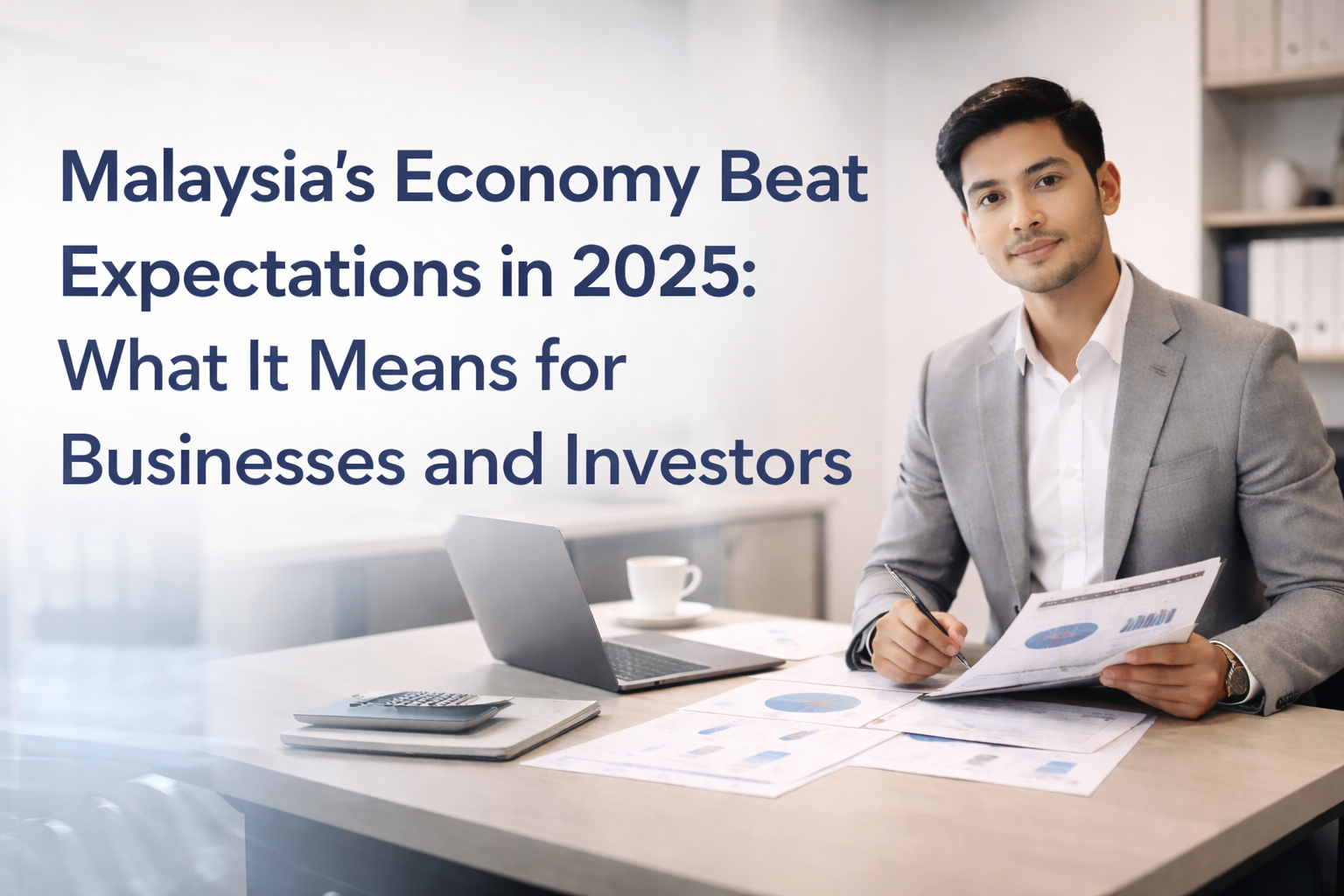
Malaysia’s economy delivered a stronger-than-expected performance in 2025, with GDP growth reaching an estimated 4.9% for the year, surpassing official forecasts and many economist predictions.
This broad-based economic strength reflects resilience in key sectors and robust domestic demand, and it carries implications for businesses, investment flows, job markets, and planning for 2026.
Malaysia’s Growth Performance in 2025
Latest advance estimates show that Malaysia’s economy expanded by about 4.9% in 2025, topping the government’s “4.0% to 4.8%” projection and exceeding previous forecasts by financial institutions.
Growth was particularly strong in the fourth quarter of 2025, with GDP rising 5.7% year-on-year, the fastest pace of expansion since mid-2024.
This accelerated performance reflected continued strength in several major sectors — including services, manufacturing, and construction — as well as resilient consumer demand and export activity.
What Sectors Drove the Expansion
Malaysia’s 2025 growth was supported by a mix of domestic and external drivers:
- Services Sector: Continued to underpin overall growth, supported by wholesale and retail trade, transportation and storage, and accommodation and food services.
- Manufacturing: Expanded due in part to strong electrical and electronics production and related value-added output.
- Construction: Maintained robust expansion, with ongoing infrastructure and property development.
- Domestic Demand: Household spending and private consumption remained solid throughout the year.
Together, these sectors created a broad foundation for Malaysia’s stronger-than-expected performance in 2025.
Why the Growth Was Higher Than Expected
Several factors helped Malaysia outperform earlier forecasts:
1. Strong Domestic Demand
Consumers continued spending on goods and services, boosting internal economic activity even in the face of global uncertainties.
2. Resilient Exports
Malaysia’s export sectors, particularly electrical and electronics products, remained competitive in key markets despite challenges such as rising tariffs on certain imports.
3. Policy Support and Investment
Government incentives, infrastructure spending, and investment flows helped sustain momentum, especially in manufacturing and services subsectors.
4. Strategic Forecast Revisions
Even before final numbers were released, research houses and financial institutions had repeatedly upgraded Malaysia’s growth outlook for 2025 based on strong third-quarter performance.
Implications for Businesses
Business Confidence and Investment
Stronger GDP growth tends to boost business confidence and encourage investment. Firms may be more willing to expand operations, upgrade equipment, hire more staff, or enter new markets when the economy is performing above expectations.
Consumer Spending Power
Robust domestic demand signals that Malaysian consumers are spending more, which can translate into higher revenues for businesses in retail, services, and consumer goods sectors. Company forecasts and budgeting strategies can take this into account for 2026 planning.
Export-Oriented Opportunities
Manufacturing and export-driven industries, especially in electrical and electronics (E&E), remain important contributors to growth. Companies in these sectors may find more opportunities for export contracts and international partnerships.
What It Means for Investors
Investors looking at Malaysia should consider the following:
- Sector Rotation: Growth leadership in services and manufacturing may attract capital toward companies operating in these areas.
- Risk Management: Resilience in the face of trade barriers suggests that diversification and risk-aware strategies remain relevant.
- Currency Strength: Continued economic strength can support the Malaysian ringgit’s performance, which influences returns for foreign investors.
Outlook for 2026
While 2025 exceeded expectations, prospects for 2026 remain cautiously positive.
Economists and research houses project that Malaysia’s GDP will expand between roughly 4.5% to slightly over 5%, driven by steady domestic demand, infrastructure investment and foreign direct investment, even amid global headwinds.
Risks still exist, including external trade uncertainties, global demand moderation, and potential tariff impacts. Businesses and investors should plan strategically for such fluctuations.
Conclusion
Malaysia’s stronger-than-expected economic growth in 2025 highlights the country’s resilience and adaptability in a challenging global environment. This performance not only reflects robust domestic demand and sectoral strength but also offers more favourable conditions for business expansion and investment planning.
For businesses and investors alike, understanding these trends can help guide strategic decisions for 2026 and beyond.